“You’re never as bad as they say you are and you’re never as good as they say you are” – Old proverb #MondayMorningWakeUpCall
 Just a reminder!
And also, don’t listen to them.

“You’re never as bad as they say you are and you’re never as good as they say you are” – Old proverb #MondayMorningWakeUpCall
Just a reminder!
And also, don’t listen to them.
Be kind, not blind #MondayMorningWakeUpCall

Sometimes it’s good to get horny and lock horns
Some people avoid conflict to remain peaceful. But that doesn’t always help. Choosing to ignore the problem at hand by being blind to its existence doesn’t reduce the tension. If anything, it continues to simmer like a dormant volcano only to escalate and erupt into a ginormous mass of hot destruction, both, to surroundings and self.
Being kind doesn’t mean avoiding conflict. There are times when the solution lies in fighting for what you want, unleashing your strength when required, so that others don’t take advantage of your kindness, they don’t mistake it as weakness.
Hint: Communication can be a solution for resolution
“I am the wisest man alive, for I know one thing, and that is I know nothing” – Plato #MondayMorningWakeUpCall
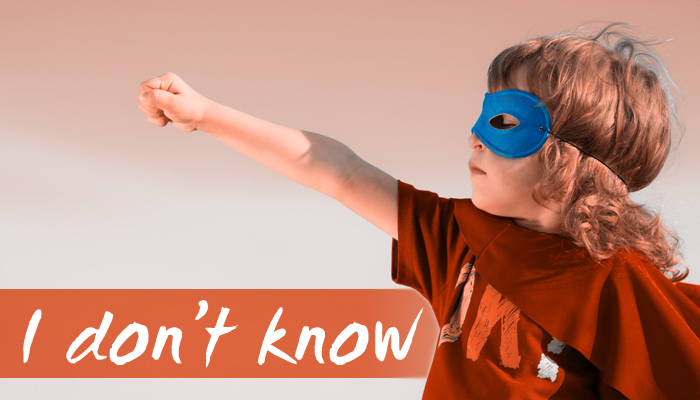
Ignorance is bliss
“I don’t know.” It’s one of the most under-rated and under-used sentences in our lives. More so I suspect, in our corporate/professional lives. Quite likely because we are ashamed and afraid (sometimes rightly so) of being judged as ignoramuses, by bosses, colleagues and team-mates, who know no better; who expect you to know all the answers.
But we need to realize it’s impossible to know all the answers. Cos learning is an endless process. (Oops! Didn’t mean to break the news to you this way!)
And the moment we know (or pretend to know) all the answers, we are setting ourselves up for ignorance.
Hint: Chances are though that if you are good at your vocation and confident about your expertise, you will also be confident about confessing lack of knowledge on what you don’t know.
Same is true for questions and answers about life.
Where there is a fire, there is an opportunity to rise higher #MondayMorningWakeUpCall

Staying Calm: The Solution To Saving Unnecessary Harm
Pop Quiz: If you saw a fire burst out in your house would your first reaction be to put it out or would it be to argue and investigate what caused the fire while it hungrily swallows everything in its path?
I’m hoping you would choose the former option.
In our daily corporate lives (and dare I say personal lives), we encounter situations which require fixing fires, the ones that haven’t been lit to keep us warm. And while the obvious action is to put the fire out immediately, before it paints scars that create Two-Face monsters, the reality is far from what is obvious.
In the throes of the heat we do everything but solve the problem. We panic, we play ‘passing the blame’, we cry and we waste precious time demanding (and God forbid, arguing) over reasons for the cause, all while the damage doubles by the minute.
Panicking, getting angry, crying, passing the blame or screaming your lungs out on an incompetent call centre agent to find reasons just adds fuel to the fire. As clear as this seems, in actuality, the smoke clouds our ability in taking the obvious action.
It is in these situations when you can take a leaf out of the book of firemen. Pretend you can be a hero just like them too, by emulating how they calmly control the chaos, fix the fire/problem first and then go about investigating the cause.
Easier said than done. While it’s an under-rated skill, it’s an essential one to develop I would say.
A related aside:
(I’ve written this post fresh from one such experience – we just spent a harrowing 48 hours fixing a problem caused by our hosting service providers, Hostgator. Due to some technical problems at their end, our portal faced a downtime of close to 48 hours. I’m also using this as an opportunity to warn anybody thinking of taking their services. Please think several 100 times before signing up with them.
There would be fewer obese people if we didn’t sugar coat everything we said #MondayMorningWakeUpCall

May not be so sweet in the long run
I suspect that in the quest of sugar coating bitter truths 2 things happen –
Even for the person delivering the sugar-coated dessert, it’s just sometimes plain easier, simpler and less stressful to concoct sentences that will not hurt others.
So why take so much effort in sugar-coating? I guess the answer is a combination of not wanting to hurt another human and to not come across as a bad person.
But you are being a bad person if you are choosing to be liked rather than to be completely honest. And you are hurting another human if you are picking your short-term benefit over someone else’s long term betterment.
Which doesn’t mean that you have to be mean or malicious. That’s just plain cruel. It just means be straight with the other person and back it up with reasons for your actions/decisions/statements. A simple explanation can sometimes be the difference between helping the person move forward or leaving the person to a lifetime of trauma and turmoil, battling demons in the head.
Warning: This also means that we all have to gear up to happily face the truth rather than be unhappily oblivious of it.
This becomes easier if you remind yourself “Satyameva Jayate” or “Truth Alone Triumphs”
“Nothing so needs reforming as other people’s habits.” ― Mark Twain #MondayMorningWakeUpCall

If he reads why don’t you?
I guess Charles Duhigg took Mark Twain’s quote rather seriously (or was just fed up with his wife’s habits) and thankfully wrote “The Power of Habits” for others to reform. I in turn am happily sharing my ‘3 minute quickie’ for all those who don’t have the habit of reading but want to develop it. Or develop or renounce any other habit for that matter.
This post (and the book) is not limited only to reading habits. Duh! You can read and share this (After all, your habits aren’t a problem, are they? It’s other people’s habits that are a pain) with anyone whose habits make you squirm and whose habits you would want reformed, whether it be being a slave to a nicotine or caffeine, having to compulsively stand on one leg at midnight or severely lacking all the 7 habits of highly successful people.
Here are my notes along with 4 of my key learnings on habits including a framework that might help them quit those annoying behaviors and develop lovable ones.
But first, what are habits?
Habits as they are technically defined in the book are: “The choices that all of us deliberately make at some point, and then stop thinking about but continue doing, often every day. At one point, we all consciously decided how much to eat and what to focus on when we got to the office, how often to have a drink or when to go for a jog. Then we stopped making a choice, and the behavior became automatic. It’s a natural consequence of our neurology. And by understanding how it happens, you can rebuild those patterns in whichever way you choose.”
4 practical tit-bits about reforming your habits –
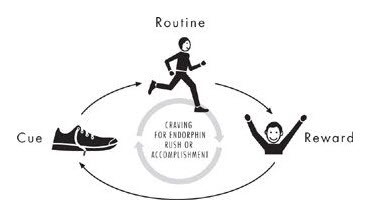
The Science Behind Habits
(An aside outside of Charles Duhigg’s gyaan – I believe that the best way to learn and develop will power is through meditation practices. If practiced right then will power will no longer seem like having to ‘will’ yourself into habits or disciplines. Rather, they become a natural outcome, gracefully effortless rather than brute force)
Here’s a 4 step framework for changing a habit
Disclaimer: In the book Charles Duhigg uses his example of how he changed his habit of eating a calorie inducing cookie every afternoon. I have tried to break down a more burning (pun intended) problem of smoking which has for more complex layers. However, it may be a more helpful application of the problem if you buy into the method/framework and not get into semantics of the example per se.
It is important to note that though the process of habit change is easily described, it does not necessarily follow that it is easily accomplished. It is facile to imply that smoking, alcoholism, overeating, or other ingrained patterns can be upended without real effort. Genuine change requires work and self-understanding of the cravings driving behaviors. Changing any habit requires determination. No one will quit smoking cigarettes simply because they sketch a habit loop.
Most importantly – you’ve got to BELIEVE you can change!
What habits have you recently changed? How? Would love to hear your stories and comments.
“A goal without a plan is just a wish” – Antoine de Saint Exupery #MondayMorningWakeUpCall

It’s not as easy as it looks. It’s not as difficult as you think.
The best way to score some goals is to put together a plan for it. The best way to go after a plan is to put some deadlines to it. One of the tricky parts is setting deadlines.
Set a deadline that’s too difficult and you just might drop dead. Set an artificial (read impossible) deadline and you won’t even care when it whooshes past you. Set a deadline that doesn’t challenge you and Parkinson’s Law (“work expands to fill in time”) will take over, you won’t ever learn your potential.
The best way I’ve found to set real deadlines is to break up the plan into small chunks and create estimates of how long I think they’ll take. It fundamentally requires just some thinking through. In instances when I’m doing something for the 1st time then I either google it to get a sense of what the task involves or figure how long others would probably take for it by googling or even asking around.
Like any skill, the more you practice, the better you become. I’ve found this a very handy skill cos I’d rather set my own deadlines than allow anyone else to put a gun on my head and shoot me dead. It also gives me the confidence to push back on unreal deadlines if I’ve thought a plan through.
You of course could also argue why do you need to set any goals. I guess that’s fine as long as you don’t have any wishes. But if you are like most people, wishing upon every star that falls, then the wish will go into motion only when YOU go into motion.
Cos like Scott Adams puts it, “Wishing starts in the mind and stays there.”
That’s just a waste of a wish, isn’t it?
Happiness starts with a smile #choosehappiness #MondayMorningWakeUpCall
Here’s to starting Monday morning smiling, laughing and happy!
An aside: I love this brand and its brand campaigns. Especially the ‘Open Happiness’ campaign.
Building a company without looking at any metrics is like sailing the stormy seas without a GPS, you might burn all your fuel and realize that you’re still in the same spot #MondayMorningWakeUpCall
And it’s equally important to measure metrics that matter, not metrics that are easy to drive or the ones that look good. There’s no point getting thrilled by looking at your odometer touch 100 knots/hr when your fuel tank reads a big red ‘E’.
So a million page views and thousands of FB likes may mean nought if your visitors aren’t becoming family.
Wisdom is following your own advice #MondayMorningWakeUpCall
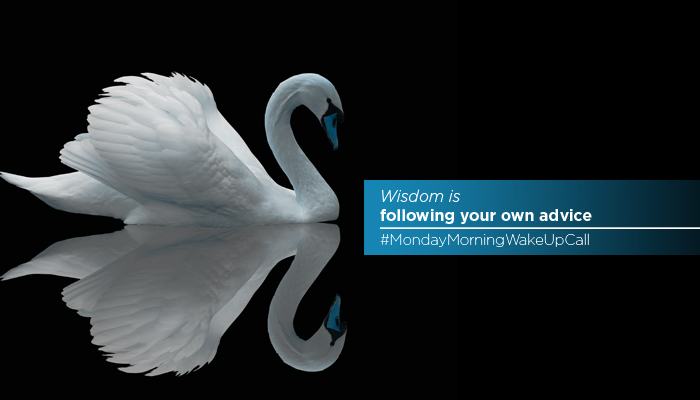
I came across this line somewhere. It stayed with me. We are so often so quick to tell others what to do or not do but how often do we really practice what we preach?
It’s also not always easy to stay true to our lofty principles when we are faced with moments of truth. Plus we are also very good at conning ourselves, justifying our actions.
Which is why, every time you can follow the advice you give others, which in fact is your own advice to yourself in a similar experience, true learning and wisdom will more likely follow.
After all, experience helps you look at life through an unfiltered lens.
 Arbit Musings